Propolino
Cosmetic recorded by Open Beauty Facts contributors
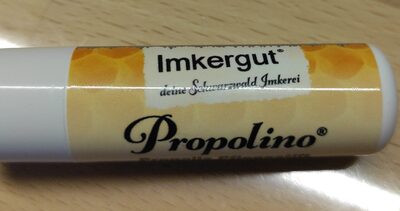
- Brand
- Imkergut
- EAN-8
- 09888102 (incorrect check digit: barcode incorrectly copied, incomplete or invalid. Untraceable product: it cannot be linked to a specific item or to recalls and alerts by barcode)
- Quantity
- 4,8 g
- Categories
- pflegeprodukt
- Packaging
- Plastic
- Sales countries
- Germany
- Record created on
- 8 December 2024
- Open Beauty Facts record: photos, edit history
- Correct the Open Beauty Facts record
- All products from the brand: Imkergut
Fiche 09888102. Open Beauty Facts, export of cosmetic products, retrieved 23 October 2026.
Data “Open Beauty Facts and its contributors”, licensed under ODbL 1.0 (opendatacommons.org/licenses/odbl/1-0); derived table distributed under the same licence.
Packaging photo dated (Open Beauty Facts, export of cosmetic products).

Has the product changed? Photograph the packaging.
Points to note
No ingredient in the recorded list is prohibited in all cases in European Union cosmetics.
Who it concerns
For each group, the ingredients of the list that an official classification or rule mentions. Open an ingredient's page to read what the text says. A group with no name does not mean the ingredients were judged to have no effect for it.
No official text covers the recognised ingredients for: pregnancy and breastfeeding, babies and children, skin, eyes and allergies, environment, read on the label.
For a question about your own situation (pregnancy, child, allergy), show this list to your doctor, midwife or pharmacist: we cannot say whether this product suits you.
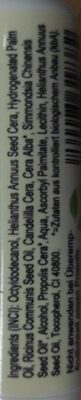
Recorded composition
Ingredient list copied by Open Beauty Facts contributors. Added to CompoAtlas on 22 October 2026.
Packaging photo dated (Open Beauty Facts, export of cosmetic products).
List photo added to Open Beauty Facts on 8 December 2024.
When the list changes, the old one remains available below with its date. The same barcode may cover several successive formulas.
15 recognised ingredients out of 15.
Hover over or tap a badge for its meaning.
Classified hazard (cancer, DNA, reproduction): Carcinogenic, mutagenic or toxic for reproduction under the CLPEU regulation that classifies chemicals by their hazards (EC No 1272/2008). Regulation, or identified endocrine disruptor. Irritation, allergy and environment: see “Who it concerns”.
| Rank | On the label | Glossary name | Matching | European Union rule | Classified hazard (cancer, DNA, reproduction) |
|---|---|---|---|---|---|
| 1 | Octyldodecanol | OCTYLDODECANOL | Certain nom identique à celui du glossaire européen | No specific rule in the Cosmetics Regulation | none |
| 2 | Helianthus Annuus Seed Cera | HELIANTHUS ANNUUS SEED CERA | Certain nom identique à celui du glossaire européen | No specific rule in the Cosmetics Regulation | none |
| 3 | Hydrogenated Paim Oil | HYDROGENATED PALM OIL | Moyenne une lettre de différence avec un nom du glossaire (faute de frappe probable) | No specific rule in the Cosmetics Regulation | none |
| 4 | Ricinus Communis Seed Oil | RICINUS COMMUNIS SEED OIL | Certain nom identique à celui du glossaire européen | No specific rule in the Cosmetics Regulation | none |
| 5 | Candelilla Cera | CANDELILLA CERA | Certain nom identique à celui du glossaire européen | No specific rule in the Cosmetics Regulation | none |
| 6 | Cera Alba | CERA ALBA | Certain nom identique à celui du glossaire européen | No specific rule in the Cosmetics Regulation | none |
| 7 | Simmondsia Chinensis Seed Oil | SIMMONDSIA CHINENSIS SEED OIL | Certain nom identique à celui du glossaire européen | No specific rule in the Cosmetics Regulation | none |
| 8 | Alcohol | ALCOHOL | Certain nom identique à celui du glossaire européen | No specific rule in the Cosmetics Regulation | none |
| 9 | Propolis Cera | PROPOLIS CERA | Certain nom identique à celui du glossaire européen | No specific rule in the Cosmetics Regulation | none |
| 10 | Aqua | AQUA | Certain nom identique à celui du glossaire européen | No specific rule in the Cosmetics Regulation | none |
| 11 | Ascorbyl Palmitate | ASCORBYL PALMITATE | Certain nom identique à celui du glossaire européen | No specific rule in the Cosmetics Regulation | none |
| 12 | Lecithin | LECITHIN | Certain nom identique à celui du glossaire européen | No specific rule in the Cosmetics Regulation | none |
| 13 | Helianthus Annuus Seed Oil | HELIANTHUS ANNUUS SEED OIL | Certain nom identique à celui du glossaire européen | No specific rule in the Cosmetics Regulation | none |
| 14 | Tocopherol | TOCOPHEROL | Certain nom identique à celui du glossaire européen | No specific rule in the Cosmetics Regulation | none |
| 15 | CI 40800 | CI 40800 | Certain nom identique à celui du glossaire européen | Colorant allowed under conditions (Annex IV) | none |
This list was copied by contributors on a given date. Compare it with the packaging of the product you have: brands change their formulas without always changing the barcode.