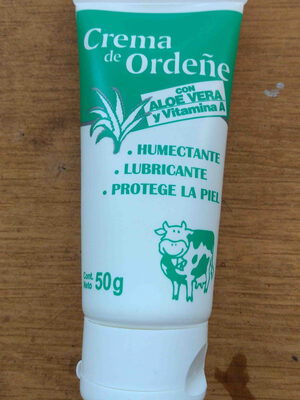
crema de ordene
Composition of crema de ordene: recorded on 8 September 2019, 15 ingredients.
Cosmetic recorded by Open Beauty Facts contributors
Points to note
Findings according to the 2019 list.
None of the 13 recognised names is prohibited in all cases in European Union cosmetics; 2 unrecognized names could not be checked.
Who it concerns
For each group, the ingredients of the list that an official classification or rule mentions. Open an ingredient's page to read what the text says. A group with no name does not mean the ingredients were judged to have no effect for it.
Prohibition or serious classificationThe text prohibits the substance for this use, or ranks it among the most serious hazards (known or presumed carcinogenic, mutagenic or reprotoxic, identified endocrine disruptor).Worth watchingThe text sets a condition or flags a hazard worth knowing: allergen, suspected effect, condition for children, hazard to the aquatic environment.For informationOfficial information with no condition on a finished product: warning to read, irritation of the pure substance.
Babies and children
- Worth watching propylparabenAnnex V, entry 12 a, prohibits it for children under 3 in certain products only: “Not to be used in leave-on products designed for application on the nappy area of children under three years of age.”
Skin, eyes and allergies
- For information sodium hydroxideClassified under the CLP Regulation: skin corrosion, category 1A (Skin Corr. 1A). This classification describes the pure substance; in a finished product it is far more diluted.
Read on the label
- Worth watching retinyl palmitateAnnex III, entry 376, requires this to be printed on the pack: “For any cosmetic product containing Retinol, Retinyl Acetate or Retinyl Palmitate the following, labelling is obligatory: ‘Contains Vitamin A. Consider your daily intake before use’.”. Regulation (EU) 2024/996 gives the reason: to inform people already exposed to vitamin A from food and food supplements that a cosmetic may add to an excess (recital 3).
- For information sodium hydroxideAnnex III, entry 15a, requires a warning that depends on the type of product: Nail cuticle solvent: “Contains alkali. Avoid contact with eyes. Can cause blindness. Keep out of reach of children”; Hair straightener: “1. Contains alkali. Avoid contact with eyes. Can cause blindness. Keep out of reach of children. 2. For professional use only. Avoid contact with eyes. Can cause blindness”; pH adjuster for depilatories: “Keep out of reach of children. Avoid contact with eyes”. None for: Other uses as pH adjuster.
- For information propylparabenAnnex V, entry 12 a, requires this to be printed on the pack: “For leave-on products designed for children under three years of age: "Do not use on the nappy area"”.
No official text covers the recognised ingredients for: pregnancy and breastfeeding, environment.
For a question about your own situation (pregnancy, child, allergy), show this list to your doctor, midwife or pharmacist: we cannot say whether this product suits you.
Recorded composition
List recorded from a 2019 photo: the formula may have changed since. Compare with the packaging. This list is not presented as the product's current composition.
Ingredient list copied by Open Beauty Facts contributors. Added to CompoAtlas on 22 October 2026.
When the list changes, the old one remains available below with its date. The same barcode may cover several successive formulas.
List recorded on 8 September 2019, before new cosmetic regulation deadlines: BHT (Annex III, entry 325): placing on the market of a non-compliant product prohibited since 1 July 2023, sale of a non-compliant product prohibited since 1 January 2024 ; RETINYL PALMITATE (Annex III, entry 376): placing on the market of a non-compliant product prohibited since 1 November 2025, sale of a non-compliant product prohibited from 1 May 2027. The formula may have changed: check the label of the product on sale.
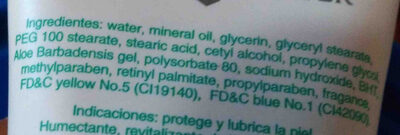
13 recognised ingredients out of 15.
Hover over or tap a badge for its meaning.
Classified hazard (cancer, DNA, reproduction): Carcinogenic, mutagenic or toxic for reproduction under the CLPEU regulation that classifies chemicals by their hazards (EC No 1272/2008). Regulation, or identified endocrine disruptor. Irritation, allergy and environment: see “Who it concerns”.
| Rank | On the label | Glossary name | Matching | European Union rule | Classified hazard (cancer, DNA, reproduction) |
|---|---|---|---|---|---|
| 1 | water | WATER | Certain same name as in the EU glossary | No specific rule in the Cosmetics Regulation | none |
| 2 | mineral oil | MINERAL OIL | Certain same name as in the EU glossary | No specific rule in the Cosmetics Regulation | none |
| 3 | glycerin | GLYCERIN | Certain same name as in the EU glossary | No specific rule in the Cosmetics Regulation | none |
| 4 | glycery! stearate | GLYCERYL STEARATE | Medium one letter away from a glossary name (likely typo) | No specific rule in the Cosmetics Regulation | none |
| 5 | PEG 100 stearate | PEG-100 STEARATE | High same name, spelling aside | No specific rule in the Cosmetics Regulation | none |
| 6 | stearic acid | STEARIC ACID | Certain same name as in the EU glossary | No specific rule in the Cosmetics Regulation | none |
| 7 | cetyl alcohol | CETYL ALCOHOL | Certain same name as in the EU glossary | No specific rule in the Cosmetics Regulation | none |
| 8 | propylene glyca. Aloe Barbadensis gel | not recognised | Not recognised aucun nom du glossaire ne correspond | Name not recognised in the European glossary | none |
| 9 | polysorbate 80 | POLYSORBATE 80 | Certain same name as in the EU glossary | No specific rule in the Cosmetics Regulation | none |
| 10 | sodium hydroxide | SODIUM HYDROXIDE | Certain same name as in the EU glossary | Allowed with restrictions (Annex III) Annex III, entry 15a: products: (a) Nail cuticle solvent (b) Hair straightener (c) pH adjuster for depilatories (d) Other uses as pH adjuster; maximum concentration: (a) 5% (b) 2% (General use) and 4.5% (Professional use) | none |
| 11 | BHT | BHT | Medium name found in a list printed without commas | Allowed with restrictions (Annex III) Annex III, entry 325: products: a) Mouthwash b) Toothpaste c) Other leave-on and rinse-off products; maximum concentration: a) 0.001% b) 0.1% c) 0.8% | none |
| 12 | methylparaben | METHYLPARABEN | Medium name found in a list printed without commas | Preservative allowed under conditions (Annex V) Annex V, entry 12: maximum concentration: 0.4% (as acid) for single ester 0.8% (as acid) for mixtures of esters | none |
| 13 | retinyl palmitate | RETINYL PALMITATE | Certain same name as in the EU glossary | Allowed with restrictions (Annex III) Annex III, entry 376: products: (a) Body lotion (b) other leave-on and rinse-off products; maximum concentration: (a) 0.05% Retinol EquivalentContent expressed as retinol: for an ester (retinyl acetate or palmitate), the amount of retinol it provides. (RE) (b) 0.3% RE | none |
| 14 | propylparaben | PROPYLPARABEN | Certain same name as in the EU glossary | Preservative allowed under conditions (Annex V) Annex V, entry 12 a: maximum concentration: - 0.14% (as acid) for the sum of the individual concentrations - 0.8% (as acid) for mixtures of substances mentioned in entry 12 and 12a, here the sum of the individual concentrations of butyl and propylparaben and their salts does not exceed 0.14% | none |
| 15 | fragance FD | not recognised | Not recognised aucun nom du glossaire ne correspond | Name not recognised in the European glossary | none |
Packaging photo dated (Open Beauty Facts, export of cosmetic products).

Product record
- Brand
- not provided
- EAN-13
- 7798031440508
- Sales countries
- Spain
- Record created on
- 8 September 2019
- Open Beauty Facts record: photos, edit history
- Correct the Open Beauty Facts record
Fiche 7798031440508. Open Beauty Facts, export of cosmetic products, retrieved 15 November 2026.
Data “Open Beauty Facts and its contributors”, licensed under ODbL 1.0 (opendatacommons.org/licenses/odbl/1-0); derived table distributed under the same licence.
This list was copied by contributors on a given date. Compare it with the packaging of the product you have: brands change their formulas without always changing the barcode.
Is something on this product wrong or out of date, whether you are a reader or the brand? Write to contact@compoatlas.com: every correction is published in the corrections log.