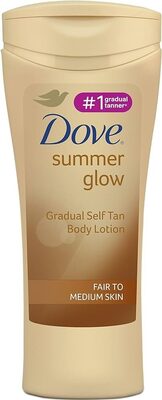
dove self tan
Composition of dove self tan: recorded on 2 July 2026, 46 ingredients. Points to note: 1.
Cosmetic recorded by Open Beauty Facts contributors
Points to note
- Information
The recorded composition on 2 July 2026 lists butylphenyl methylpropional, prohibited in cosmetics in the European Union (rule applicable since 1 March 2022) (Annex II, entry 1666). Check the current packaging: the record is contributed and the formula may have changed. This product is reported as sold outside the European Union (Australia,South Africa): the EU rule may not apply there.
Source: CosIngThe European Commission's database of cosmetic ingredients., Annex II of Regulation (EC) No 1223/2009 (prohibited substances), annexe II, entrée 1666.
Who it concerns
For each group, the ingredients of the list that an official classification or rule mentions. Open an ingredient's page to read what the text says. A group with no name does not mean the ingredients were judged to have no effect for it.
Prohibition or serious classificationThe text prohibits the substance for this use, or ranks it among the most serious hazards (known or presumed carcinogenic, mutagenic or reprotoxic, identified endocrine disruptor).Worth watchingThe text sets a condition or flags a hazard worth knowing: allergen, suspected effect, condition for children, hazard to the aquatic environment.For informationOfficial information with no condition on a finished product: warning to read, irritation of the pure substance.
Pregnancy and breastfeeding
- Prohibition or serious classification butylphenyl methylpropionalClassified under the CLP Regulation: reproductive toxicity, category 1B (Repr. 1B), a hazard to fertility (known or presumed hazard) and the unborn child (suspected hazard).
Babies and children
- Worth watching propylparabenAnnex V, entry 12 a, prohibits it for children under 3 in certain products only: “Not to be used in leave-on products designed for application on the nappy area of children under three years of age.”
Skin, eyes and allergies
- Worth watching parfum“Parfum” stands for a mixture whose composition does not have to be detailed. Some allergenic substances must nevertheless be named separately in the ingredient list above 0.001% (leave-on product) or 0.01% (rinse-off product). The Regulation names them in 63 entries of its Annex III, for example Linalool, Limonene, Citronellol, Geraniol, Coumarin, Citral, Eugenol or Hexyl Cinnamal: if you are allergic to one of them, look for its name in the list.
- Worth watching alpha-isomethyl lononeAllergen to declare: Annex III, entry 90, requires it to be named in the ingredient list above 0.001% in a leave-on product and 0.01% in a rinse-off product, so that allergic people can avoid it.
- Worth watching benzyl alcoholClassified under the CLP Regulation: eye irritation, category 2 (Eye Irrit. 2); skin sensitisation, category 1B (Skin Sens. 1B). Allergen to declare: Annex III, entry 45, requires it to be named in the ingredient list above 0.001% in a leave-on product and 0.01% in a rinse-off product, so that allergic people can avoid it.
- Worth watching citronellolAllergen to declare: Annex III, entry 86, requires it to be named in the ingredient list above 0.001% in a leave-on product and 0.01% in a rinse-off product, so that allergic people can avoid it.
- Worth watching coumarinAllergen to declare: Annex III, entry 77, requires it to be named in the ingredient list above 0.001% in a leave-on product and 0.01% in a rinse-off product, so that allergic people can avoid it.
- Worth watching geraniolClassified under the CLP Regulation: skin sensitisation, category 1 (Skin Sens. 1). Allergen to declare: Annex III, entry 78, requires it to be named in the ingredient list above 0.001% in a leave-on product and 0.01% in a rinse-off product, so that allergic people can avoid it.
- Worth watching hexyl cinnamalAllergen to declare: Annex III, entry 87, requires it to be named in the ingredient list above 0.001% in a leave-on product and 0.01% in a rinse-off product, so that allergic people can avoid it.
- Worth watching limoneneClassified under the CLP Regulation: skin irritation, category 2 (Skin Irrit. 2); skin sensitisation, category 1 (Skin Sens. 1). Allergen to declare: Annex III, entry 88, requires it to be named in the ingredient list above 0.001% in a leave-on product and 0.01% in a rinse-off product, so that allergic people can avoid it.
- Worth watching linaloolClassified under the CLP Regulation: skin sensitisation, category 1B (Skin Sens. 1B). Allergen to declare: Annex III, entry 84, requires it to be named in the ingredient list above 0.001% in a leave-on product and 0.01% in a rinse-off product, so that allergic people can avoid it.
- For information citric acidClassified under the CLP Regulation: eye irritation, category 2 (Eye Irrit. 2). This classification describes the pure substance; in a finished product it is far more diluted.
- For information phenoxyethanolClassified under the CLP Regulation: serious eye damage, category 1 (Eye Dam. 1). This classification describes the pure substance; in a finished product it is far more diluted.
Environment
- Prohibition or serious classification cyclopentasiloxaneECHA has included it in the Candidate List (substances of very high concern, REACH Regulation) because it is persistent, bioaccumulative and toxic (PBT) and very persistent and very bioaccumulative (vPvB).
- Worth watching limoneneClassified under the CLP Regulation: hazardous to the aquatic environment, short term, category 1 (Aquatic Acute 1); hazardous to the aquatic environment, long term, category 1 (Aquatic Chronic 1).
Read on the label
- For information propylparabenAnnex V, entry 12 a, requires this to be printed on the pack: “For leave-on products designed for children under three years of age: "Do not use on the nappy area"”.
For a question about your own situation (pregnancy, child, allergy), show this list to your doctor, midwife or pharmacist: we cannot say whether this product suits you.
Upcoming decisions and differences elsewhere
- BUTYLPHENYL METHYLPROPIONAL : decision in preparation (California (United States)) ; different rule in another country (South Korea).
- LIMONENE : different rule in another country (South Korea).
Recorded composition
Ingredient list copied by Open Beauty Facts contributors. Added to CompoAtlas on 15 November 2026.
When the list changes, the old one remains available below with its date. The same barcode may cover several successive formulas.
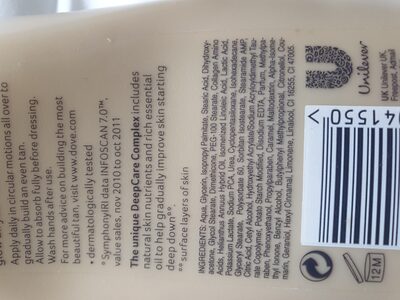
43 recognised ingredients out of 46.
Hover over or tap a badge for its meaning.
Classified hazard (cancer, DNA, reproduction): Carcinogenic, mutagenic or toxic for reproduction under the CLPEU regulation that classifies chemicals by their hazards (EC No 1272/2008). Regulation, or identified endocrine disruptor. Irritation, allergy and environment: see “Who it concerns”.
| Rank | On the label | Glossary name | Matching | European Union rule | Classified hazard (cancer, DNA, reproduction) |
|---|---|---|---|---|---|
| 1 | aqua | AQUA | Certain same name as in the EU glossary | No specific rule in the Cosmetics Regulation | none |
| 2 | glycerin | GLYCERIN | Certain same name as in the EU glossary | No specific rule in the Cosmetics Regulation | none |
| 3 | isopropyl palmitate | ISOPROPYL PALMITATE | Certain same name as in the EU glossary | No specific rule in the Cosmetics Regulation | none |
| 4 | stearic acid | STEARIC ACID | Certain same name as in the EU glossary | No specific rule in the Cosmetics Regulation | none |
| 5 | dihydroxyacetone | DIHYDROXYACETONE | Certain same name as in the EU glossary | Allowed with restrictions (Annex III) Annex III, entry 322: products: (a) Hair dye substance in non-oxidative hair dye products (*) (b) Self-tanning products (*) (*) From 26 January 2022 hair dye and self-tanning products containing that substance and not complying with the restrictions shall not be placed on the Union market. From 22 April 2022 hair dye and self-tanning products containing that substance and not complying with the restrictions shall not be made available on the Union market; maximum concentration: (a) 6.25% (b) 10% | none |
| 6 | glycol stearate | GLYCOL STEARATE | Certain same name as in the EU glossary | No specific rule in the Cosmetics Regulation | none |
| 7 | dimethicone | DIMETHICONE | Certain same name as in the EU glossary | No specific rule in the Cosmetics Regulation | none |
| 8 | peg-100 stearate | PEG-100 STEARATE | Certain same name as in the EU glossary | No specific rule in the Cosmetics Regulation | none |
| 9 | collagen amino acids | COLLAGEN AMINO ACIDS | Certain same name as in the EU glossary | No specific rule in the Cosmetics Regulation | none |
| 10 | helianthus annuus hybrid oil | HELIANTHUS ANNUUS HYBRID OIL | Certain same name as in the EU glossary | No specific rule in the Cosmetics Regulation | none |
| 11 | isomerized linoleic acid | ISOMERIZED LINOLEIC ACID | Certain same name as in the EU glossary | No specific rule in the Cosmetics Regulation | none |
| 12 | lactic acid | LACTIC ACID | Certain same name as in the EU glossary | No specific rule in the Cosmetics Regulation | none |
| 13 | potassium lactate | POTASSIUM LACTATE | Certain same name as in the EU glossary | No specific rule in the Cosmetics Regulation | none |
| 14 | sodium pca | SODIUM PCA | Certain same name as in the EU glossary | No specific rule in the Cosmetics Regulation | none |
| 15 | urea | UREA | Certain same name as in the EU glossary | No specific rule in the Cosmetics Regulation | none |
| 16 | cyclopentasiloxane | CYCLOPENTASILOXANE | Certain same name as in the EU glossary | No specific rule in the Cosmetics Regulation | none |
| 17 | isohexadecane | ISOHEXADECANE | Certain same name as in the EU glossary | No specific rule in the Cosmetics Regulation | none |
| 18 | glyceryl stearate | GLYCERYL STEARATE | Certain same name as in the EU glossary | No specific rule in the Cosmetics Regulation | none |
| 19 | polysorbate 60 | POLYSORBATE 60 | Certain same name as in the EU glossary | No specific rule in the Cosmetics Regulation | none |
| 20 | sorbitan isostearate | SORBITAN ISOSTEARATE | Certain same name as in the EU glossary | No specific rule in the Cosmetics Regulation | none |
| 21 | stearamide amp | STEARAMIDE AMP | Certain same name as in the EU glossary | No specific rule in the Cosmetics Regulation | none |
| 22 | citric acid | CITRIC ACID | Certain same name as in the EU glossary | Entry for a mixture with the same CAS number (Annex V) | none |
| 23 | cetyl alcohol | CETYL ALCOHOL | Certain same name as in the EU glossary | No specific rule in the Cosmetics Regulation | none |
| 24 | hydroxyethyl acrylate/sodium acryloyldimethyl taurate copolymer | HYDROXYETHYL ACRYLATE/SODIUM ACRYLOYLDIMETHYL TAURATE COPOLYMER | Certain same name as in the EU glossary | No specific rule in the Cosmetics Regulation | none |
| 25 | potato starch modified | POTATO STARCH MODIFIED | Certain same name as in the EU glossary | No specific rule in the Cosmetics Regulation | none |
| 26 | disodium edta | DISODIUM EDTA | Certain same name as in the EU glossary | No specific rule in the Cosmetics Regulation | none |
| 27 | parfum | PARFUM | Certain same name as in the EU glossary | No specific rule in the Cosmetics Regulation | none |
| 28 | methylparaben | METHYLPARABEN | Certain same name as in the EU glossary | Preservative allowed under conditions (Annex V) Annex V, entry 12: maximum concentration: 0.4% (as acid) for single ester 0.8% (as acid) for mixtures of esters | none |
| 29 | phenoxyethanol | PHENOXYETHANOL | Certain same name as in the EU glossary | Preservative allowed under conditions (Annex V) Annex V, entry 29: maximum concentration: 1.0% | none |
| 30 | propylparaben | PROPYLPARABEN | Certain same name as in the EU glossary | Preservative allowed under conditions (Annex V) Annex V, entry 12 a: maximum concentration: - 0.14% (as acid) for the sum of the individual concentrations - 0.8% (as acid) for mixtures of substances mentioned in entry 12 and 12a, here the sum of the individual concentrations of butyl and propylparaben and their salts does not exceed 0.14% | none |
| 31 | caramel | CARAMEL | Certain same name as in the EU glossary | Colorant allowed under conditions (Annex IV) | none |
| 32 | maltodextrin | MALTODEXTRIN | Certain same name as in the EU glossary | No specific rule in the Cosmetics Regulation | none |
| 33 | alpha-isomethyl lonone | ALPHA-ISOMETHYL IONONE | High same name, spelling aside | Allowed with restrictions (Annex III) | none |
| 34 | benzyl alcohol | BENZYL ALCOHOL | Certain same name as in the EU glossary | Allowed with restrictions (Annex III) Preservative allowed under conditions (Annex V) Annex III, entry 45: products: (a) Solvent (b) Fragrance/ aromatic compositions/ their raw materials Annex V, entry 34: maximum concentration: 1.0% | none |
| 35 | butylphenyl methylpropional | BUTYLPHENYL METHYLPROPIONAL | Certain same name as in the EU glossary | Prohibited in cosmetics (Annex II) | Toxic for reproduction: presumed effect (category 1B, CLP classification) |
| 36 | citronellol | CITRONELLOL | Certain same name as in the EU glossary | Allowed with restrictions (Annex III) | none |
| 37 | coumarin | COUMARIN | Certain same name as in the EU glossary | Allowed with restrictions (Annex III) | none |
| 38 | geraniol | GERANIOL | Certain same name as in the EU glossary | Allowed with restrictions (Annex III) | none |
| 39 | hexyl cinnamal | HEXYL CINNAMAL | Certain same name as in the EU glossary | Allowed with restrictions (Annex III) | none |
| 40 | limonene | LIMONENE | Certain same name as in the EU glossary | Allowed with restrictions (Annex III) | none |
| 41 | linalool | LINALOOL | Certain same name as in the EU glossary | Allowed with restrictions (Annex III) | none |
| 42 | ci 16255 | CI 16255 | Certain same name as in the EU glossary | Allowed with restrictions (Annex III) Colorant allowed under conditions (Annex IV) Annex III, entry 192: products: Hair dye substance in non-oxidative hair dye products; maximum concentration: 0.5% | none |
| 43 | ci 47005 | CI 47005 | Certain same name as in the EU glossary | Allowed with restrictions (Annex III) Colorant allowed under conditions (Annex IV) Annex III, entry 326: products: Non-oxidative hair dye products; maximum concentration: 0.5% | none |
| 44 | unilever 12m uk unilever uk | not recognised | Not recognised aucun nom du glossaire ne correspond | Name not recognised in the European glossary | none |
| 45 | freepost | not recognised | Not recognised aucun nom du glossaire ne correspond | Name not recognised in the European glossary | none |
| 46 | admail | not recognised | Not recognised aucun nom du glossaire ne correspond | Name not recognised in the European glossary | none |
The evidence date of this ingredient list is unknown.
Has the product changed? Photograph the packaging.
Product record
- Brand
- Dove
- EAN-13
- 8717163041550
- Sales countries
- Australia, South Africa
- Record created on
- 30 September 2021
- Open Beauty Facts record: photos, edit history
- Correct the Open Beauty Facts record
- All products from the brand: Dove
Fiche 8717163041550. Open Beauty Facts, export of cosmetic products, retrieved 15 November 2026.
Data “Open Beauty Facts and its contributors”, licensed under ODbL 1.0 (opendatacommons.org/licenses/odbl/1-0); derived table distributed under the same licence.
This list was copied by contributors on a given date. Compare it with the packaging of the product you have: brands change their formulas without always changing the barcode.
Is something on this product wrong or out of date, whether you are a reader or the brand? Write to contact@compoatlas.com: every correction is published in the corrections log.
Cite this page: CompoAtlas, “dove self tan: composition and ingredients”, https://compoatlas.com/en/cosmetics/products/8717163041550-dove-self-tan, updated 2 July 2026.